Sep 22

Where To Stand When You’re In ‘Mortal Terror’

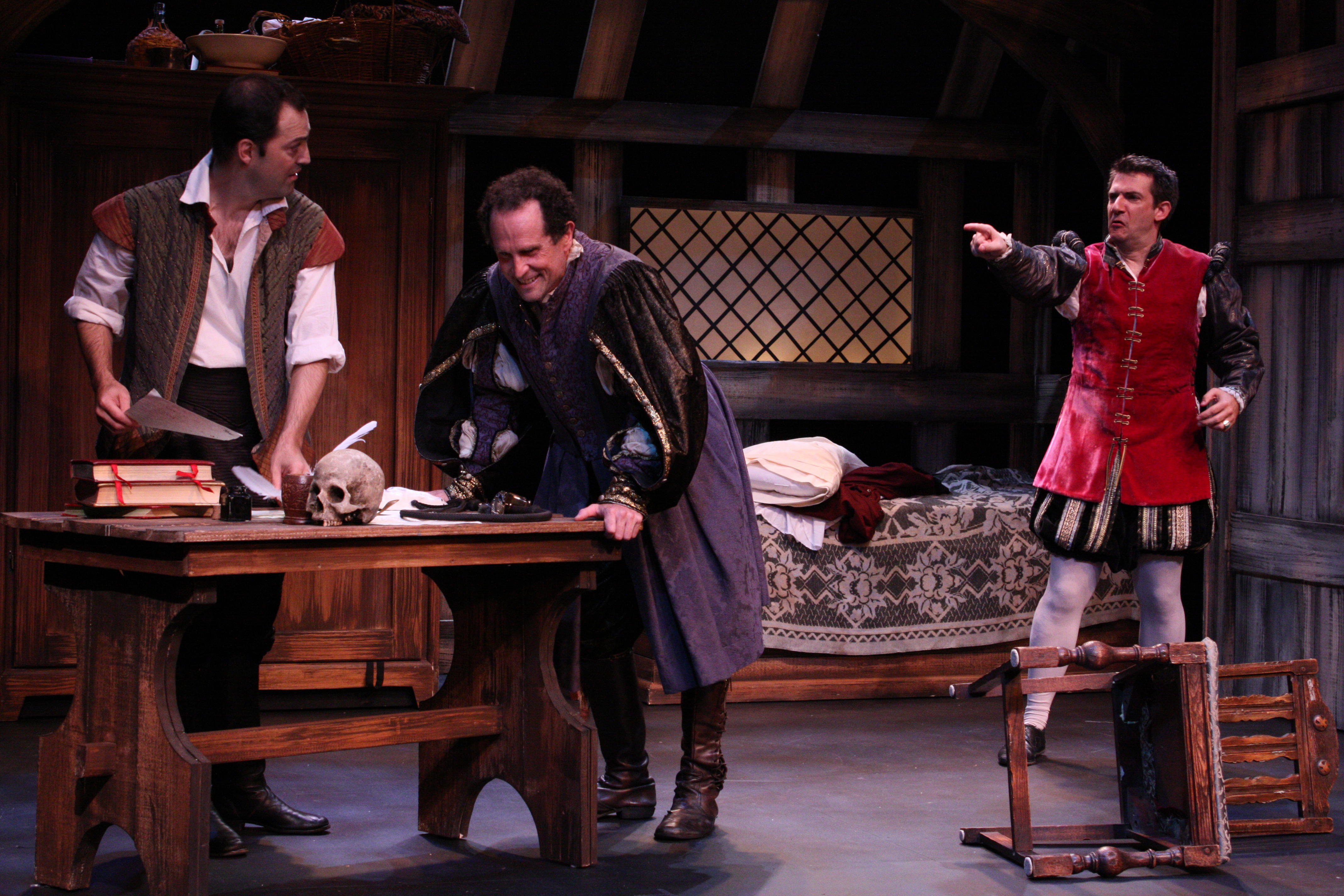
Will Shakespeare, Ben Jonson and John Marston (Stafford Clark-Price, Jeremiah Kissel and John Kuntz) Photo by Boston Playwrights' Theatre


Mortal Terror by Robert Brustein, Suffolk University & Boston Playwrights’ Theatre, The Modern Theatre at Suffolk University, 9/15/11-10/2/11, http://www.bu.edu/bpt/.

Reviewed by Becca Kidwell

(Boston, MA) Each generation lives in fear of war, conflicts, pain, and death.  Each person has to choose how they are going to react to the conflict.  Mortal Terror addresses this puzzlement in Elizabethan garb.  Rowdy writers, absolute rulers, and crazy conspirators throw words back and forth until every character must face his own compass and decide on where he stands.

Will Shakespeare, the toast of Renaissance England’s theatre scene, gets the opportunity to write a play to legitimize King James’ rule. Continue reading
Jan 11

HYSTERIA: the naked women in Freud’s closet

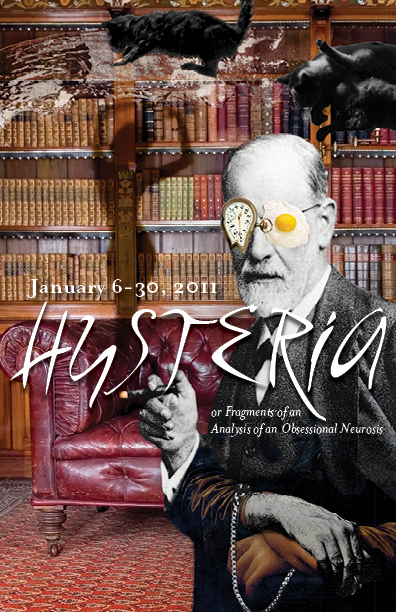
Hysteria, or Fragments of an Analysis of a Obsessional Neurosis by Terry Johnson, The NoraTheatre Company, Central Square Theater, 1/6/11-1/30/11.  Nudity and mature themes.  http://www.centralsquaretheater.org/season/10-11/hysteria.html

Reviewed by Becca Kidwell

Freudian analysis?  A dream of Dali?  Too much spicy food?  These are questions the audience might ask while watching Hysteria.  Using the real meeting between Freud and Dali as a starting point, Johnson’s play moves from farce to surrealism to nothingness.  The Nora Theatre Company makes this strange journey palatable and pleasurable and  masks the flaws of the script.

The exaggerated perspective of the set, Freud’s study, immediately tells the audience that something peculiar is going to happen.  As the play unfolds, Janie E. Howland’s surrealistic set design matches the frenetic energy that is sent forth from the actors.  No one questions the absurdity of the situations that take place because the cast commit fully to the roles that they play.  Richard Sneed, as Freud, tries to hold the world together as it keeps trying to spiral out-of-control.  His warm-fatherly nature combined with Freud’s philosophies moves the audience from sympathy for a dying man to anger at an intractable man that will not even admit the possibility that he might have erred. Continue reading